Showing posts with label World Heritage Site. Show all posts

Tuesday, November 30, 2010

Nikko in Fall

This fall has been truly beautiful. While the past summer was baking hot, and in fact set a few records, October and November have been filled with clear and sunny days. Not too hot, not too cold.

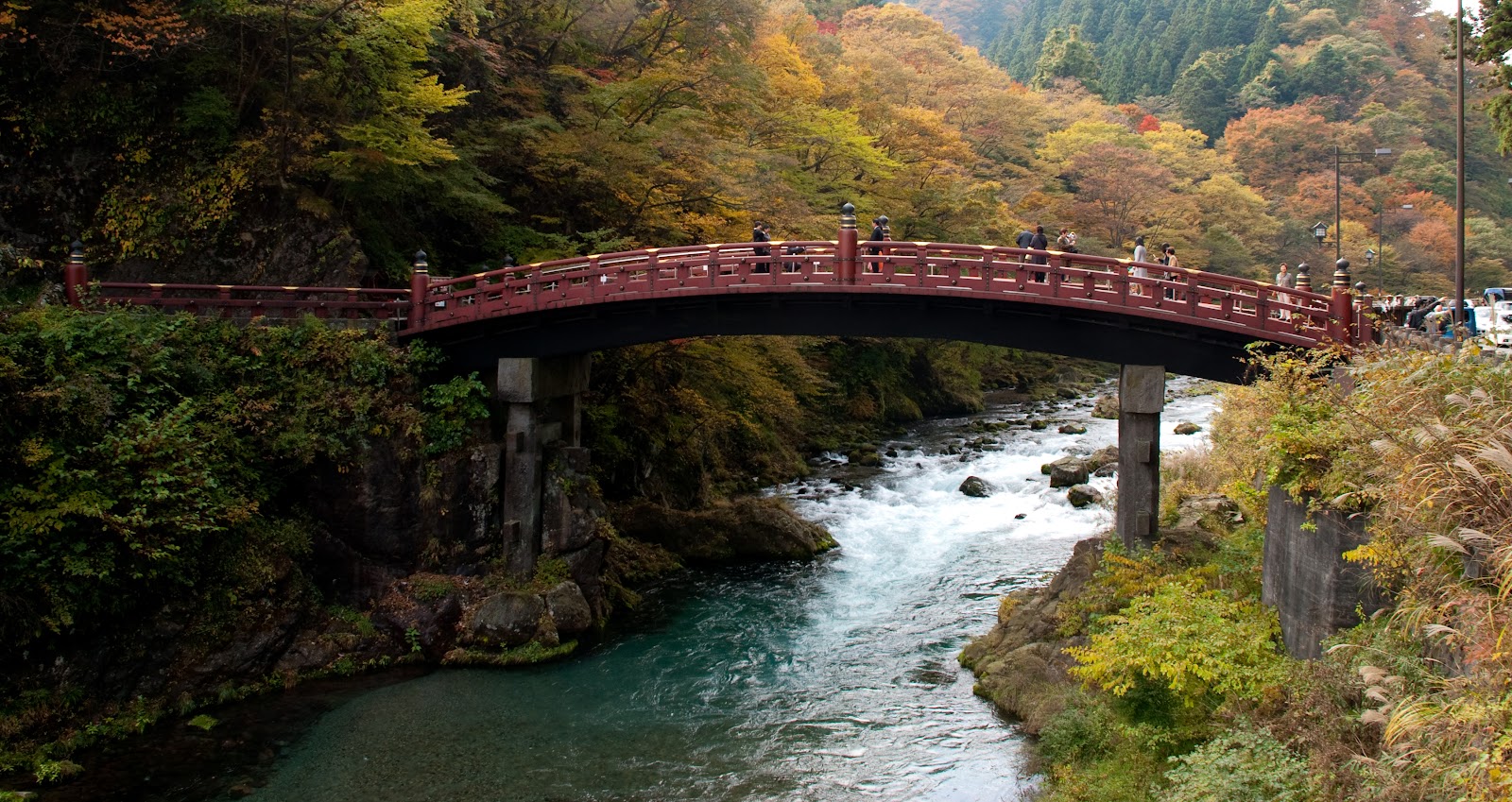
Nearby Nikko, home of Toshogu Shrine that I visited in August, is famous across Japan as an autumn destination. The brilliant fall colors in the area draw people from all over the Kanto region.


This can certainly make for clogged roads and busy attractions, but luckily for us, most people access Nikko from the Tokyo side. The drive from my place to Nikko was easy and pleasant, with gorgeous views at every turn. I drove up with a trio of flatlanders, who really enjoyed the trip.


We met up with a few more friends from around the area in Nikko, though it took longer than expected due to brutal traffic through town. The shrines were as gorgeous as always, and the small garden near the entrance to Toshogu was a delight.


That is one thing I really love about Japanese cultural sites. No matter how many times you have been, and this marks my third trip to Nikko, there always seems to be something new to discover.


We then headed up into the hills, back to the Kegon falls. It was nice to arrive a little earlier this time, and get the chance to take the elevator down to the lower viewing platform. 


The geology nut in me loved that vantage point. We could see the bottom of a layer of columnar basalt, the same type of rock that formed the Giants Causeway in Northern Ireland. The meeting point between the basalt lava flows and the underlying rocks was very obvious, even in the fading light.


After a well deserved sit down and some dinner, we all went our separate ways, with the knowledge that the weekend had been properly seized.

Wednesday, September 08, 2010

Tosho-gu


Located in Tochigi Prefecture north west of Tokyo, Nikko has been a worthwhile destination for centuries. The primary draw for the past couple of hundred years is Tosho-gu, the shrine that is the final resting place for Tokugawa Ieyasu.


Tosho-gu was built by Ieyasu's son Hidetada, and enlarged by his grandson Iemitsu. They needed a grand and glorious gesture to show the power and wealth of the still new Tokugawa Shogunate. Japan had just come out of a long period of civil war and disunity, and the Tokugawa made every effort to forestall any slide back into chaos. That their own heads would have been first on the chopping block in that event was certainly an added motivation.


The various shrine complexes are set a short ways up from the town itself, and an easy walk from the train station. Nikko is a very popular day trip from Tokyo, and it is easy to see why. It provides a remarkable contrast to Ieyasu's old capital, with the tall forests and ornate shrine buildings a far cry from the busy streets around Shinjuku.


Nikko is rather unique in Japan, far more gaudy and ornate than is usually the case in Japanese religious buildings. In that way it shares a certain aesthetic similarity with some of the traditional buildings I saw in China, bright and colorful as opposed to the more standard unpainted wood.


Indeed, Nikko can be overwhelming to the senses, especially when you factor in heat, crowds and a surfeit of steps. (I was at Nikko three days after Fuji, and had mostly recovered, but the steps triggered a measure of Post Traumatic Mountain Stress Syndrome in my calves.)


I have been to Nikko before, by myself over five years ago. That trip was during a very chilly mountain March, so I was quite glad to return with friends. Though the occasional drizzle merely made the late August heat even wetter and stickier and made the dirty snow piles of March an attractive alternative. 


After an extra fee and a hike up more stairs into the woods you come to the burial place of the man who unified Japan. It does seem ironic that once you get past the Rococo meets East Asia styling of the shrine buildings, Tokugawa's mausoleum is an understated bronze cylinder that still holds whatever remains of his ashes, these hundreds of years later.

Tuesday, February 23, 2010

Panoramic Asia


Since photos like panoramas and HDRs take a bit longer to put together, I've saved up most of the panoramas for this post. As always with panoramas, I highly encourage clicking on the photo to view it in a larger size, much of the detail is lost when viewed on the main blog page. This first picture is Shinjuku, the hotel I stayed in is the large red building on the far left of the frame.


This is the Sai river in Kanazawa, facing towards downtown and my old apartment.


I took this picture while walking to the station from Travis's house in Kohoku.


From the top of Osaka Castle you have great views in every direction. Here is the view to the south, towards where Zach lives.


These two photos are right in central Osaka, the Glico Man is a famous sight in Osaka, and changes every few years.


Here we are facing back north towards Osaka Castle, taken from the top of Tsutenkaku Tower in the Shinsekai neighborhood. My favorite site in Osaka, Spa World, is right next to the tower. You can sit in the (bathing suit required) outdoor spas on the roof of Spa World and watch Tsutenkaku Tower light up as the sun sets.


The great wall is of course an excellent subject for panoramas, though I found when I got home I had only shot this one!


The Temple of Heaven in Beijing.


I shot three panoramic images of the sun rising over the Forbidden city, but the change in exposure across the breadth of the image was too much, and the other two just didn't come out.


The roof of Zach's apartment is open, so I traipsed up twice for a photo shoot. It is a fun and unique perspective, above the crowd but not too far above that all the detail on the buildings is lost.


So there we have it! I have a few HDR's to post, but that will likely come in a few weeks, as I am a bit behind in my processing still. However, I lucked out in Hawaii this trip, the weather was gorgeous and I'll start posting about that trip soon, as well as my preparations to return to Japan in a mere four weeks.

Saturday, February 20, 2010

Himeji Castle


Himeji-Jo is hands down the most famous castle in Japan. The imposing and beautiful castle is one of the few remaining originals, narrowly surviving both the end of feudalism and the firebombing of World War II.


Of the twelve remaining wooden castles, Himeji is the most complete, with both the central keep, or donjon, and the surrounding buildings and walls all surviving. This really lets a visitor get a sense of just how fortified these castles were. The path up to the keep twists and turns, and is often a narrow path with towers and walls on either side. Any attacking army would have a very difficult time.


The castle was completely restored in the 1950's and 60's, but is undergoing a new round of restoration and preservation work. When I visited in November a small portion of the outer wall blocked off, but the coming months will see a vast covered scaffolding being erected over the central keep. The keep will be closed for several months, and the scaffolding will be up for years.


The refurbishment will take until 2015, and while there are plenty of other castles to visit while we wait, there are few that achieve the beauty and imposing grandeur of Himeji-jo.

Tuesday, February 02, 2010

The Temple of Heaven


The Temple of Heaven rates high on the list of Ming Dynasty landmarks that dot Beijing. The temple is actually a series of large halls arranged in an even larger park, and the park itself was in use.


The area near the entrance was filled with mostly older couples dancing the morning away, and seeing the delight and joy on their faces brought a matching smile to my own. So often when traveling you see the great landmarks covered in tourists but not people who actually live there, so it was good to see the park being used by the locals.


One of the major structures is the Hall for Good Harvests, where the emperor would go once a year to offer sacrifices for a good harvest. This was to me the most impressive of the buildings, and it made it into many of my photos.


Really the most fun I had though was at a nearby tourist shop, bargaining down the price of a wall scroll I bought. I'm sure I still overpaid, but since I ended up paying about 8 dollars for it, I figure I can't complain too much!

Tuesday, January 26, 2010

That's a Great Wall!


High on the list of any visitor to Beijing, or even China in general, is the so called Great Wall of China. Being interested in history, architecture and fun things like that, there was no chance that I would miss a trip out to the wall covered hills and ridges north of Beijing. The easiest way to make the trip is to book a tour through your hotel, and don't forget to bargain the price down a bit! After driving all over Beijing to pick up the travelers our first stop was the Ming Tombs a bit north of the city. After the Ming Dynasty moved the capital to Beijing the emperors built large, lavish tombs in an area of excellent feng sui.


The tomb we visited was certainly interesting, but what we all really came for was the wall itself, or at least the portion of it at Badaling. The Badaling section of the Great Wall is one of several that have been restored for tourists, and is the most popular. While popular means crowds, the chill November weather helped the crowd control, and the wall is so large and steep that relatively few people walk much beyond the gondola drop off point.


I prepared for the excursion by reading The Great Wall by John Man. His attempts to trace the wall through both reality and popular imagination were most illuminating. We all know two things about the wall, that it can be seen from space, and that it was built by the first Qin Emperor who united China in 221 BC.


Well you know what they say, everything you know is wrong, and both of those facts are wrong. You can't see the wall from space with the naked eye, and while the Qin empire did build a great wall, they didn't build the massive and imposing edifice that we tourists love to take pictures of. That was built by the Ming dynasty to protect their new capital from Mongolian and Manchu raiders in the late 1400s.


The original Great Wall was built of rammed earth, and little of it has survived the passage of over two millenniums. In fact, there are many different walls built over the years by the various dynasties of China to keep out tribes of nomadic horsemen, the Ming example being only the best preserved and the most recent.


Once I made it to the wall though, any academic discussion was moot. Seeing the sinuous winding of the stone rampart over ridges and hilltops as far as the eye could see was an utterly unique experience. After walking through the Forbidden City, and hiking up and down the steep steps of The Great Wall, I can say with confidence that the Ming emperors thought big, and built big.


I teamed up with two other fellow travelers from my tour and we hiked down to the watchtower you see here. The hike down was rough, but the hike up almost killed me. Despite coming from the high mountains of Colorado, trying to pull myself up the slope from that tower was exhausting. It really made you respect the soldiers who patrolled in the area, and the poor laborers who had to build the wall in the first place. The best part of the day was the end, when myself and my two new traveling companions went out for a lavish late Thanksgiving dinner of Peking Duck that surpassed any expectations I might have had. If any readers find themselves in Beijing desiring some roast duck, I highly recommend the Dadong restaurant, of which there are several around the city.

Wednesday, January 20, 2010

Beijing Bound


One of the cheapest and easiest ways to travel between Shanghai and Beijing is by night train. The journey takes around 12 hours, but if all goes well you'll sleep for most of it. There are three fare options, the cheapest being the 'hard seat', which just doesn't sound comfortable at all. In the middle is the 'hard sleeper' bed that we opted for, with the luxurious(and correspondingly expensive) 'soft sleeper' option at the top.


The beds were arranged in bunks of three, and I volunteered for the top bunk. It didn't seem like it from below, but that top bunk was WAY up there. Despite the 'hard sleeper' designation, the beds were fairly comfortable and once the lights went out I had little problem falling asleep. It reminded me a bit of camping, where you wake up often during the night, but fall right back asleep every time.


The contrast between Beijing and Shanghai is huge. Shanghai is like a teenager, doing ten things at once, vibrant and full of life. Beijing is more like an old man, full of history and the satisfaction of a life well lived. The train station in Beijing is surrounded by boring communist apartment blocks, which didn't make for a very welcoming introduction to the city, but once we had showered at the hotel we were ready to see what Beijing had to offer.


Naturally the first sight to see in Beijing is Tian an Men Square and the adjacent Forbidden city. I was shocked at the scale of the Forbidden City. It just keeps going, massive courtyard after massive courtyard. The low, gray light made photography a little difficult, and the chilly late November afternoon didn't encourage lingering out of doors, but the whole experience was still amazing.


The Forbidden City closed at 5:00, so all in all we only had a few hours inside, and could have easily done with more time to explore the more out of the way areas.


The sun was setting fast as we walked out the back entrance. Todd and Bobbi met up with a friend of theirs they were staying with, and I headed back to my hotel room for a brief rest before dinner. Beijing was cold, crowded and full of very unhelpful taxi drivers, but it was still a fascinating place, and I aimed to get as much out of the city as I could!