Showing posts with label Kyushu. Show all posts

Monday, June 19, 2006

Kyushu The Last: Beppu

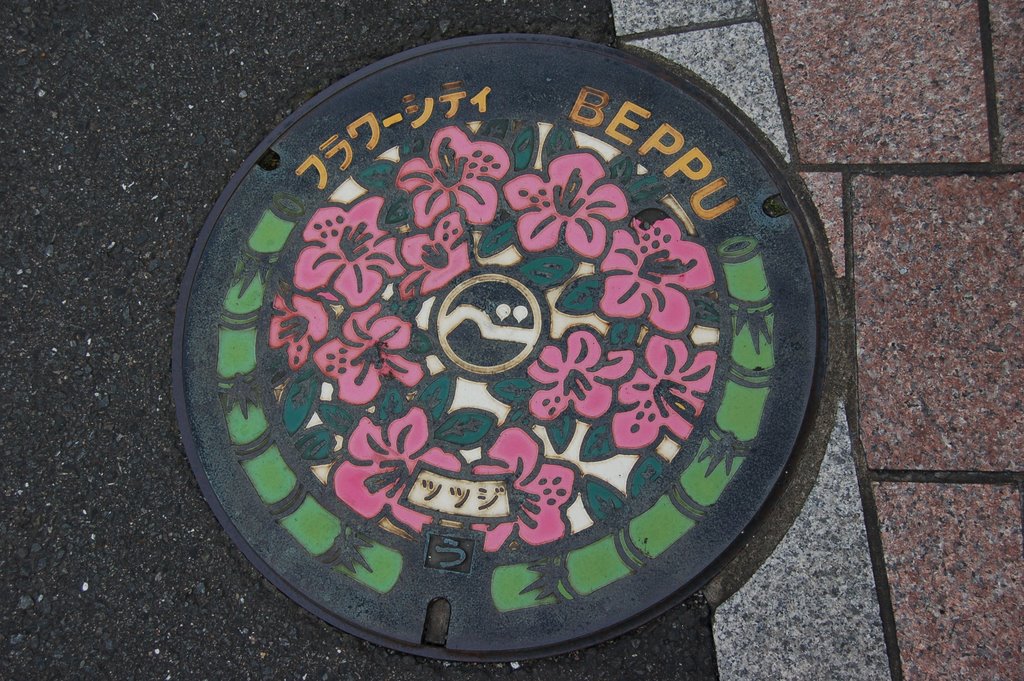
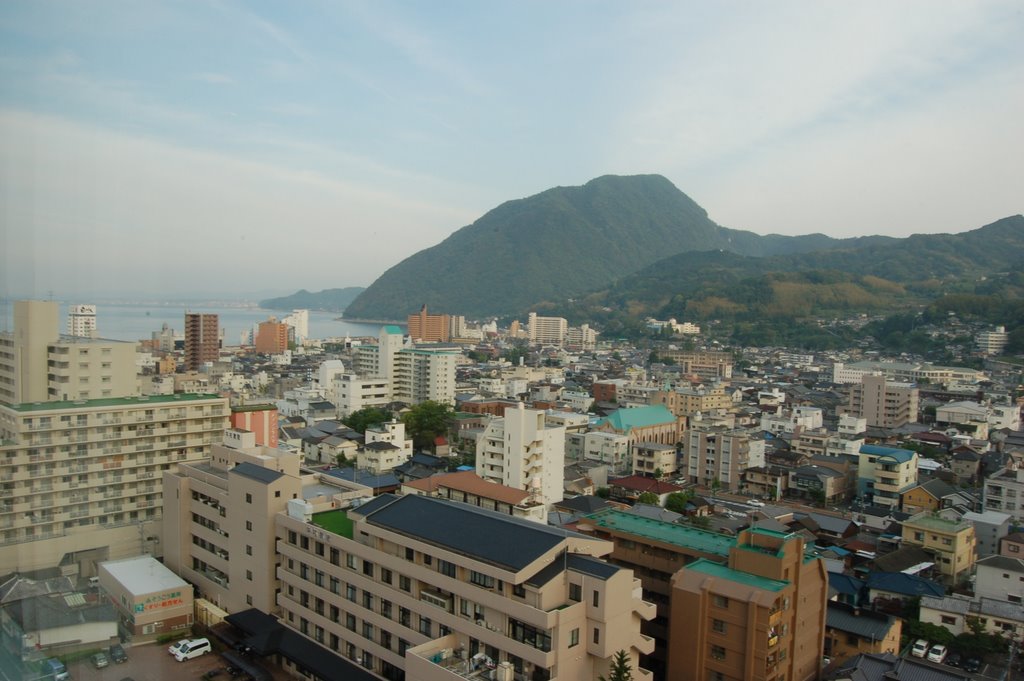
Leaving Aso, I caught one of only three trains a day that make the trip to Beppu. We traveled through some of the most beautiful scenery I have yet seen in Japan. Dense forests, green rice paddies, and deep rivers were the norm. It was pretty amazing. As for Beppu itself, some cities have a purpose, and Beppu's is getting clean, it is the onsen capital of Japan. From large, glitzy hotels to small public baths, Beppu has it all.


Being that I had spent some hours on trains and busses, not to mention walking around a sulpherous crater, I was in dire need of a bath. I checked into an almost full hotel, they had to give a triple bed room larger than my apartment! The next stop was dinner, as I hadn't had a chance to eat lunch on the mountain. Well unless you consider ice cream bars to be lunch... Luckily the hotel had three intergral restaurants, which was fine by me, I didn't feel like doing any more walking than neccesary.


As I tucked into a big bowl of marble tofu at the Chinese restaurant, I met a small group of college kids, and we struck up a conversation. They were here on a two week trip/homestay visit to Kuyshu and Kyoto and were on there last night in Beppu. They were going to Karaoke later in the evening, would I like to come? It was like offering an addict a fix, I'm always up for Karaoke! It turned out that there were a lot more than just 4 in the group though, I met many many people. It was fun, but I was kind of shocked just how.. immature they were. Still and all, it was a great night, certainly better than sittin in my room watching Patriot Games subbed into Japanese.


I awoke the next morning with the intention of hopping a few onsen baths and checking out the geothermal "boiling hells of Beppu." What I found was pouring, drenching rain. I was pretty tired from the hard day and the late night, and I was not looking forward to hiking through an all day Kyushu gullywasher just so I could keep getting wet! So I decided to just pack it up and make the epic journey back home. And it was pretty epic, two hours by express to the Shinkansen line, three hours to Osaka, then three more to Kanazawa. I made each connection with seconds to spare, which was nice for keeping long waits to a minimum, but it also kept me unfed till I made it home.


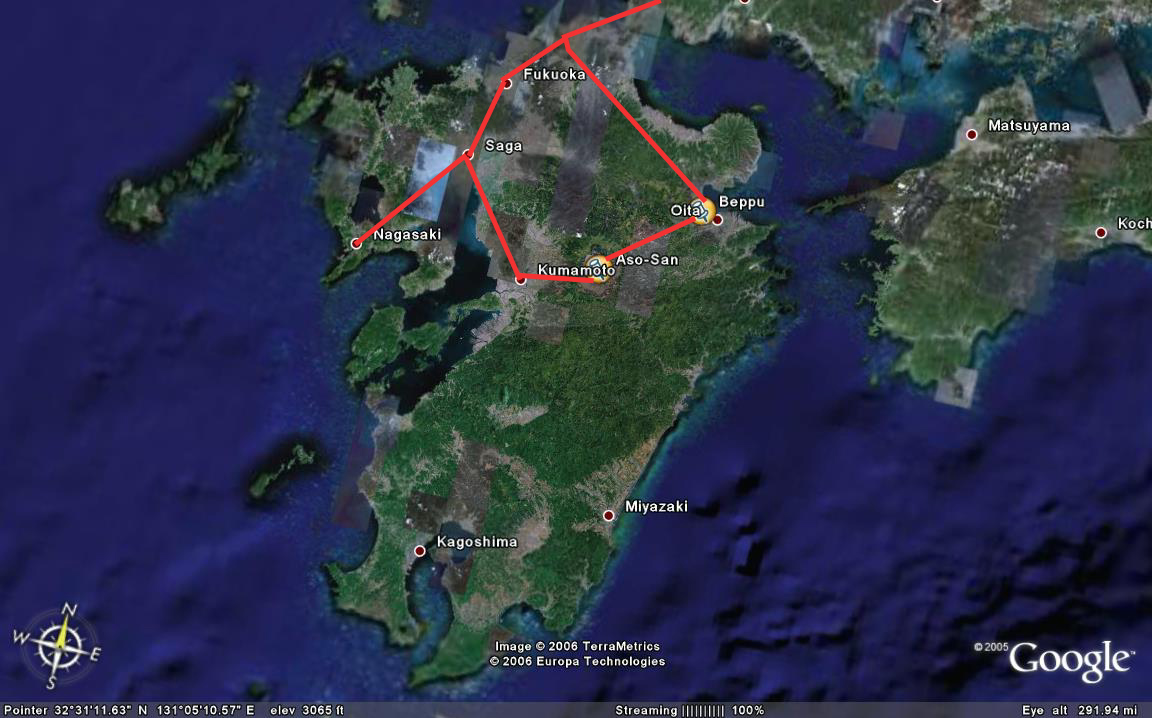
So here it is, the itinerary and a good view of just how far we traveled in those 5 days. Kyushu may be a lot smaller than Honshu, but it is still pretty big. Much bigger than I had actually expected! Well it was a great trip, and I really hope I can make it back down there, especially points further south like Kagoshima, the Venice of Japan. (Who comes up with these names?)

Next: Japanese numbers and dancing in the streets.

Thursday, June 08, 2006

Kyushu Part 5 Aso-San


So upon leaving Kumamoto Liz decided she didn't have any particular desire to see a Volcano or to explore the baths of Beppu, so she headed back to Kanazawa. This left me alone to pursue my geological interests.


As I have mentioned before, I'm a big fan of geology. Rocks, faults, mountains, crystals, I find all of it fascinating! I suppose it comes from growing up with the Rocky Mountains in my backyard. While the Rockies have plenty of old volcanic formations to peruse, nothing has been active for tens of thousands of years at the east, and more usually a few million years. So for me a chance to see an active volcano that erupts quite regularly was a chance not to be missed!


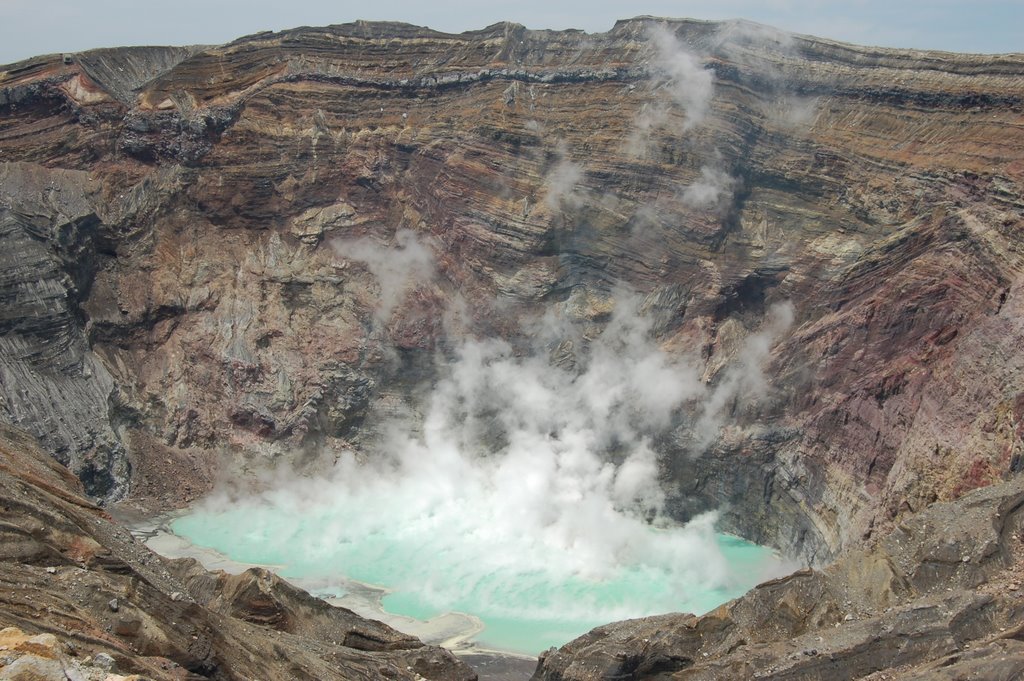
The Mt. Aso Caldera is right in the middle of Kyushu, roughly half way between Kumamoto and Beppu. It is the worlds largest still active calderas, with a circumference of about 120 kilometers encompasing several towns and onsen resorts. For the record, a caldera is the remnent of a large volcano that has collapsed, usually from a massive eruption. The Aso Caldera was formed about 90,000 years ago, and since then 5 new volcanos have risen in the center.


One of these "new" cones, Mt Naka, is the only one in the group that is still active, and in addition to constantly expelling sulpheric fumes and steam it provides the area with a major tourist attraction! To get there from Kumamoto I had to take two local trains, switching half way. As the track heads up the caldera ridge to the town of Aso, it has to go up a set of switchbacks where the train actually reverses direction a couple of times to climb the steep hillside.


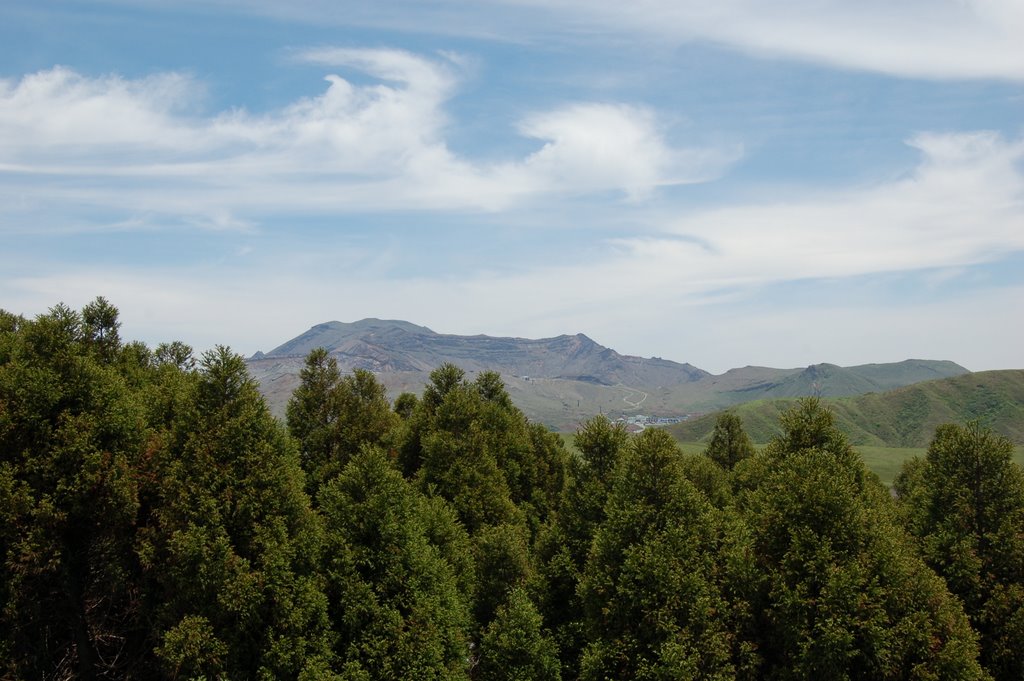
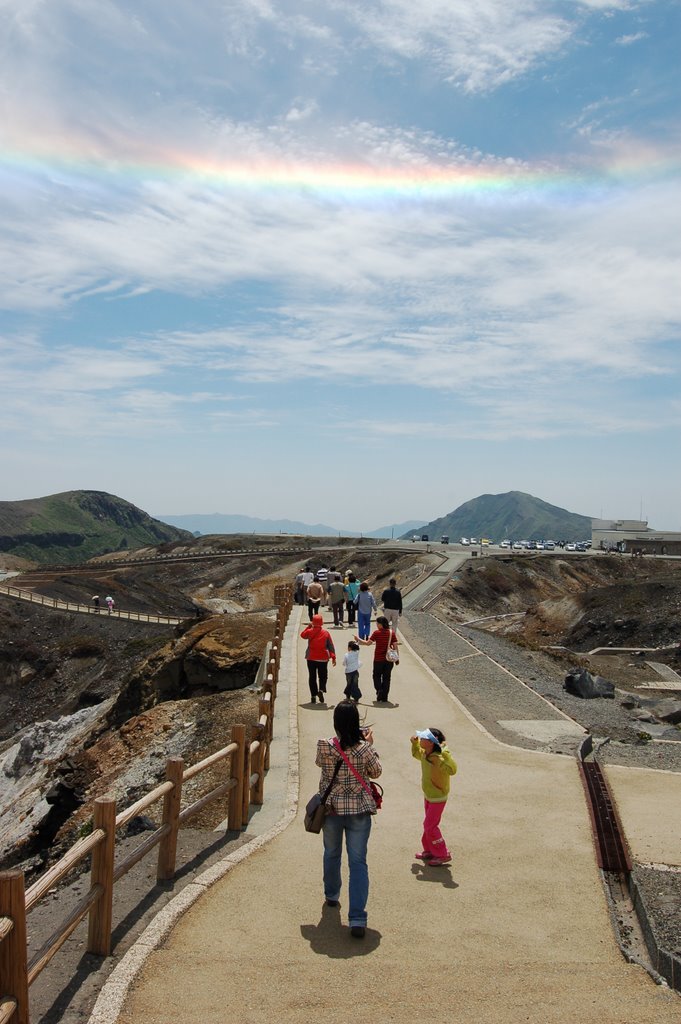
Once a traveler has arrived at the sublimely beautiful caldera floor, it is just a matter of another hour on a bus to the Aso-san Ropeway, which carries the hordes of visitors to the rim of the crater. While it was very popular with the local tourists, I didn't see very many westerners that day, it seems despite the amazing views the area is a bit off the beaten track.


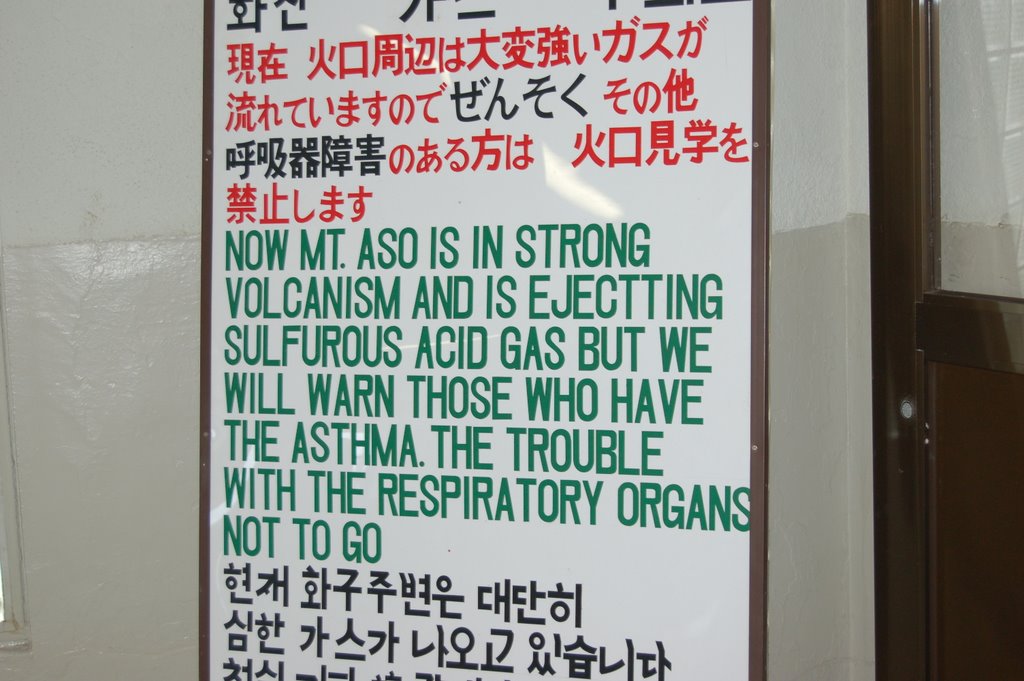
All and all Mt Aso was awsome. The constantly billowing steam reminded me that it was ready to blow its top again at any time. (In 1979 a surprise eruption actually killed a few tourists.) The twisted volcanic rocks that littered the area were a fascinating vision of Hell, or Mordor at least! Living things need not apply, there was not much greenery at the top, nor did I see any animals.

Well, with that marked off of my life's to-do list, I headed back down the mountain to catch the express to Beppu, the Hot Springs Las Vegas.

Tuesday, June 06, 2006

Kyushu Part 4- Kumamoto Castle

The proud central keep of Kumamoto Castle


The next stop in our grand loop around northern Kyushu was the city of Kumamoto, home to one of the largest and most advanced of castles in Japan. However Kumamoto castle has a few interesting connections with history, and Hollywood.


The prototypical Japanese castle town actually came about in a time of peace. Many castles were build or expanded by Tokugawa Ieyasu in an attempt to solidify his hold on Japan. However, since the Edo period was a time of peace and isolation, very few of the grand Japanese castles every saw war. They all met their fate in more mundane ways, Okazaki Castle was pulled down at the end of feudalism, Osaka Castle was struck by lighting, and Nagoya Castle was burned in World War II.

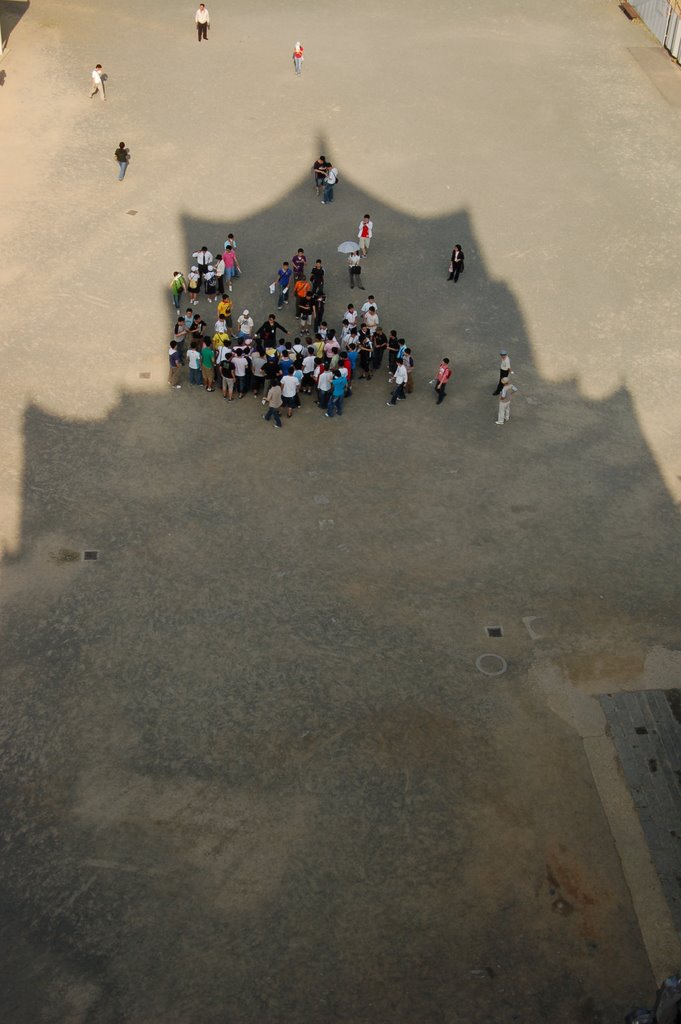
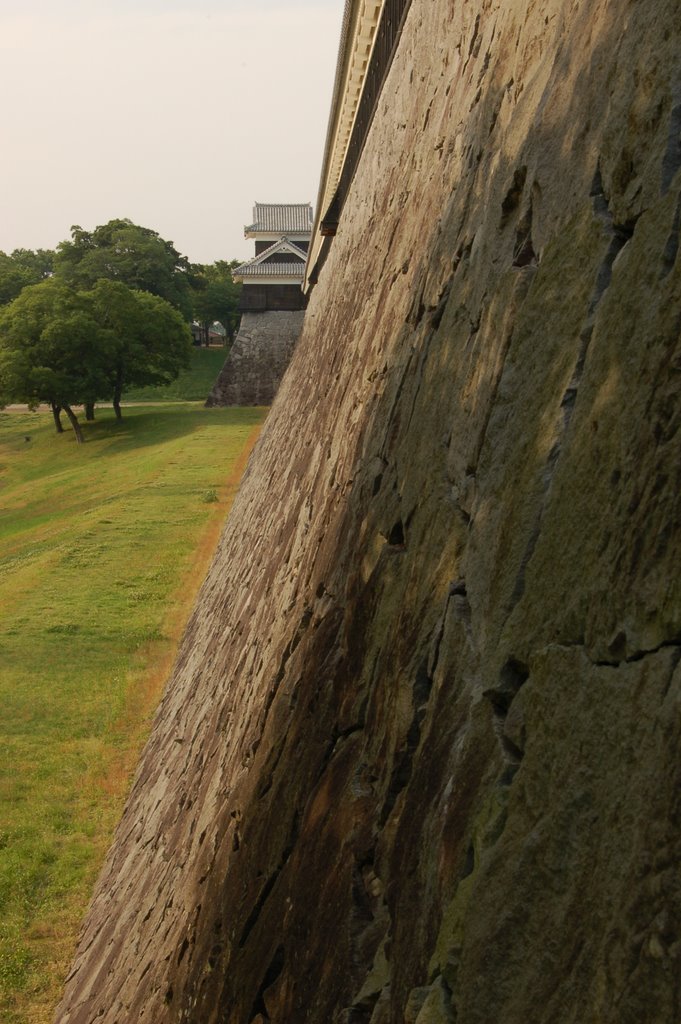
The Looming Shadow of the Keep


Yet Kumamoto Castle was one of very few castles to be involved in an actual land battle, and to be destroyed not through chance or bombing, but in an actual siege. Kyushu was the center of the anti-Meiji Satsuma Rebellion in 1877. Led by an ex-Imperial Army Field Marshal who had been instrumental in the Meiji Restoration, Saigo Takamori, the rebellious Samurai besieged the goverenment forces in Kumamoto Castle.

This is actually one of many defensive towers on the wall. It is original as the wind was blowing the other way when the keep burned. It is unique in that the structure is large enough to be the keep in a smaller castle, yet here is just a tower.


Unfortunatly for Takamori, while he did eventually take, and burn, the castle, it proved a rather disasterous victory as it allowed the Imperial Army time to mobilize a fresh army of 300,000 men. After weeks of bloody fighting it all came to an end in September with the death of Takamori, who has since become a bit of a folkhero.


Ahh but what about the Hollywood connection? Well remember the film Dances with Samurai? Oops, wait I meant The Last Samurai. Yup, a heavily fictionalized Takamori became Ken Wantanabe's noble character, never mind the fact that the rebellion was less about 'tradition!' and more about the Samurai holding on to their protected status and privileges.


Well enough about the history. The castle was Amazing. They haven't finished fully restoring it to a mostly pre-burned state, but what they have finished is pretty darn cool. The central keep is quite imposing, and has excellent historical displays on the area and of course the seige, including a few rare photographs. To a certain extent there is the 'typical' display in one of these castle museums, like armor and a few Katana, yet each is also a product of its area and so while there is always a bit of 'more of the same' there is also a lot of fascinating new information. Then there is the always impressive castle archecture, that NEVER gets old.

Next: A Parting of Ways and An Active Volcano.

Friday, June 02, 2006

Kyushu Part 3- Nagasaki at Night


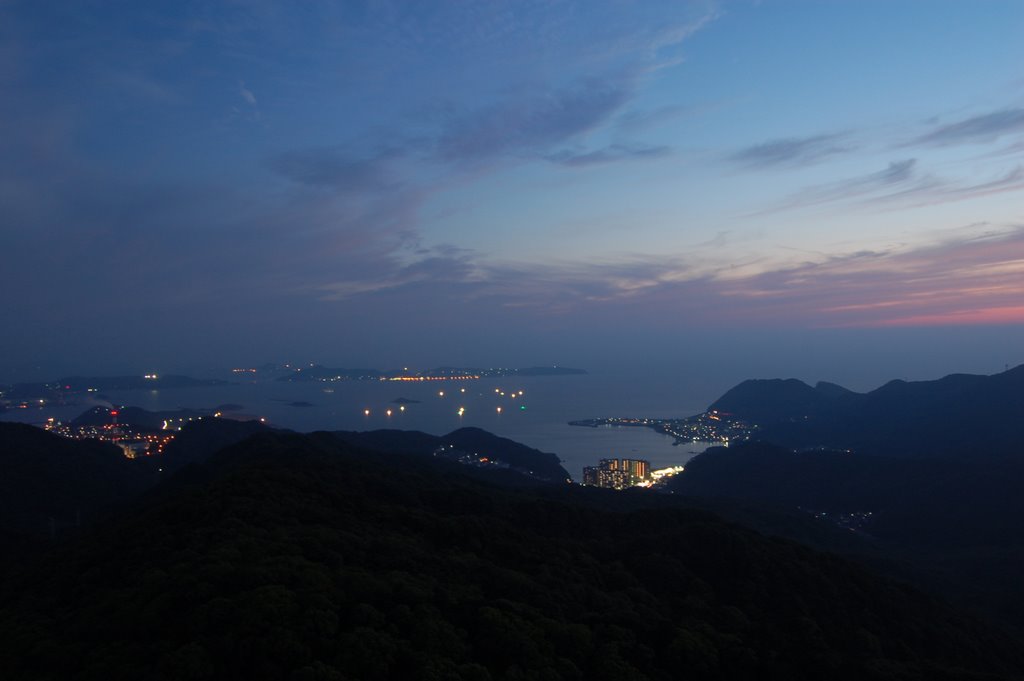
To the west of Nagasaki, opposite Glover Garden, is Inasa-san, a 333 meter mountain looming above the city center. The summit promised amazing views of Nagasaki and the surrounding area, and I was not dissapointed.


I arrived at the cable car station shortly before sunset, and found just one other person waiting to board. Marc, a Nova teacher from Yokohama on a short weekend vacation. We struck up a conversation, and soon became good solid travel buddies. It turned out that he was nearing the end of his time in Japan, and was wrapping up a few travel loose ends. So on his 'weekend' of Tuesday Wednesday he flew down to Nagasaki, which was actually both cheaper and shorter than taking the Shinkansen!


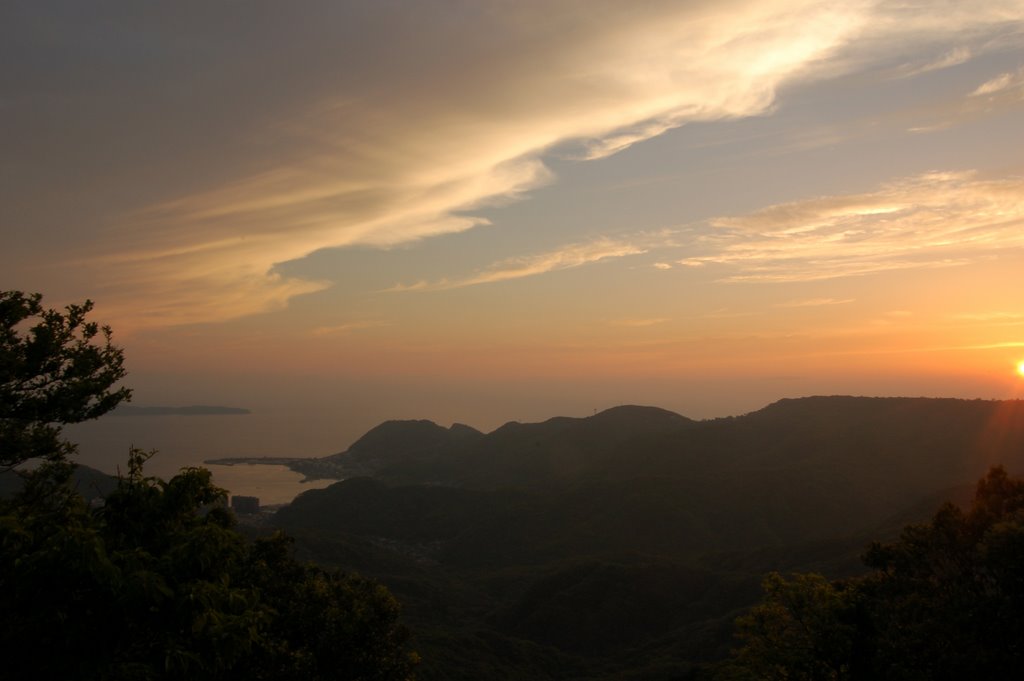
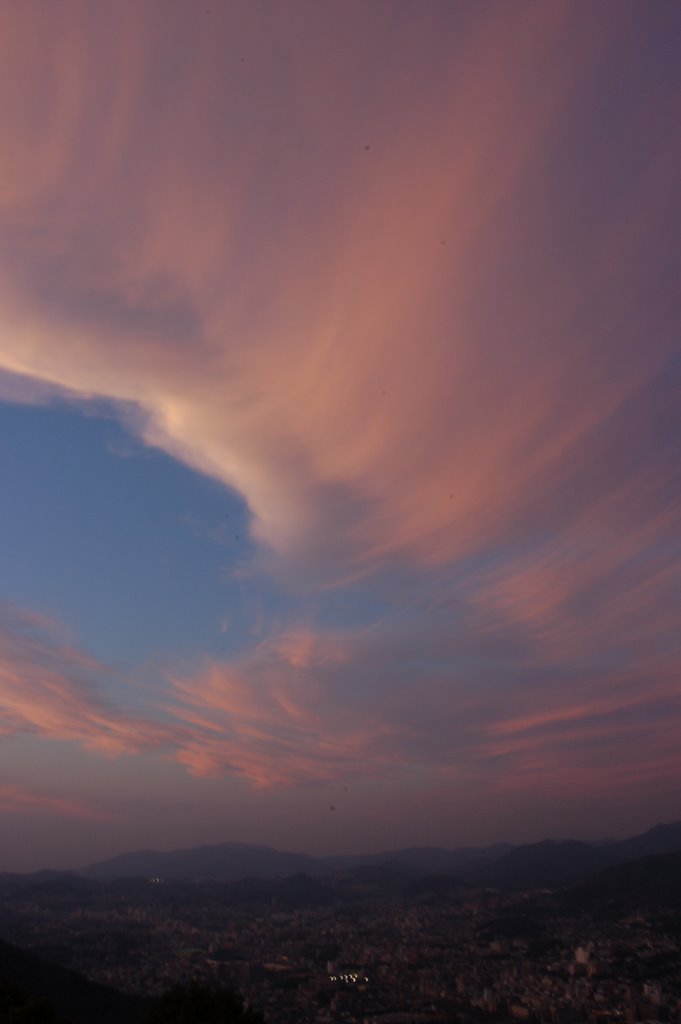
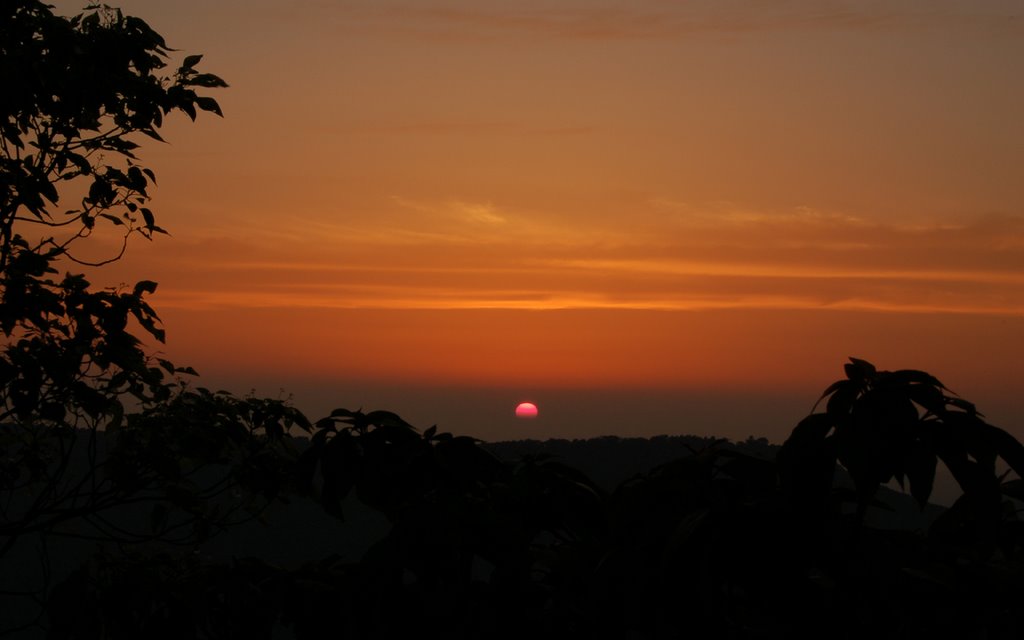
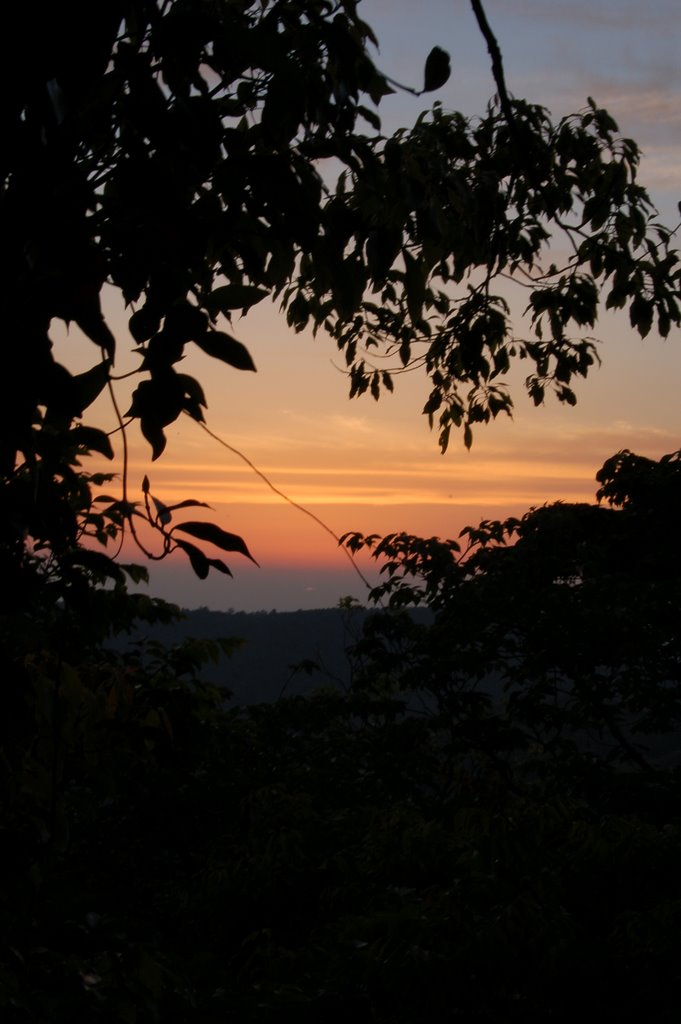
From the summit, the views were glorious. I mean this was certainly one of the top sunsets I have ever seen, and coming from Colorado I have seen some nice ones. These photographs, while I am proud of them, simply do not do the view justice at all. It was amazing. And we had it all to ourselves... for a while.


As it got darker and the night view of the city came out, people started to accumulate in small groups. Well small until a huge school group showed up. Like any school group, they were loud just by being a group of 80 or so high school students. Yet these were really really loud. Shouting at their friends strung across the summit. Yelling, giggling and generally making asses of themselves. *sigh* and I thought American tourists were annoying.


Well we had our pictures, so Marc and I fled the growing school crowd for the safety of the cable car home. We exchanged numbers and then headed back to our respective hotel rooms to drop off cameras and such. Then we met up with another guy that Marc had met earlier, a Dutch man whose name I have forgotten. Renee maybe? Anyway, he was awsome, and on a 6 week vacation in Japan. We hit up an izakaya, where I tried Basashi. Think, horse sashimi. Yup, nice slices of RAW HORSE! Actually, it tasted great. I mean it, not only was it not disgusting, but I liked it. Who would have thought? Well after a couple of beers and some pool it was time to hit the sack in preperation for a 10:00 check out and our trip to Kumamoto.

Monday, May 29, 2006

Kyushu Part 2- Nagasaki in the Daytime

Nagasaki's past as a city of great importance to Japan has been overshadowed by the Atomic bombing at the end of World War II.

It was in Kyushu that Japan first made contact with the western world. Some shipwrecked Portugese washed ashore, and quickly set up trading links all over the island. Worried about increasing foreign activity and the influence of Catholicism, all foreign trade was soon restricted to Nagasaiki. Soon after the Portugese were confined on a small artifical island in the bay, Dejima.
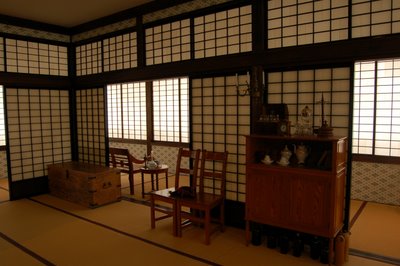
Interior of the Dutch Factory on Dejima


Soon thereafter the Portugese and their meddling Jesuit friends were expelled, and an exclusive trade agreement was struck with the Protestant Dutch, who were seen as interested only in trade, and not in conversion. They took over Dejima, and it became the sole avenue for Western trade, philosophy, and science for over two hundred years, from 1641 to 1854 when Perry forcibly opened Japan to the West.
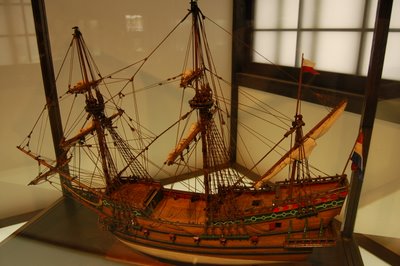
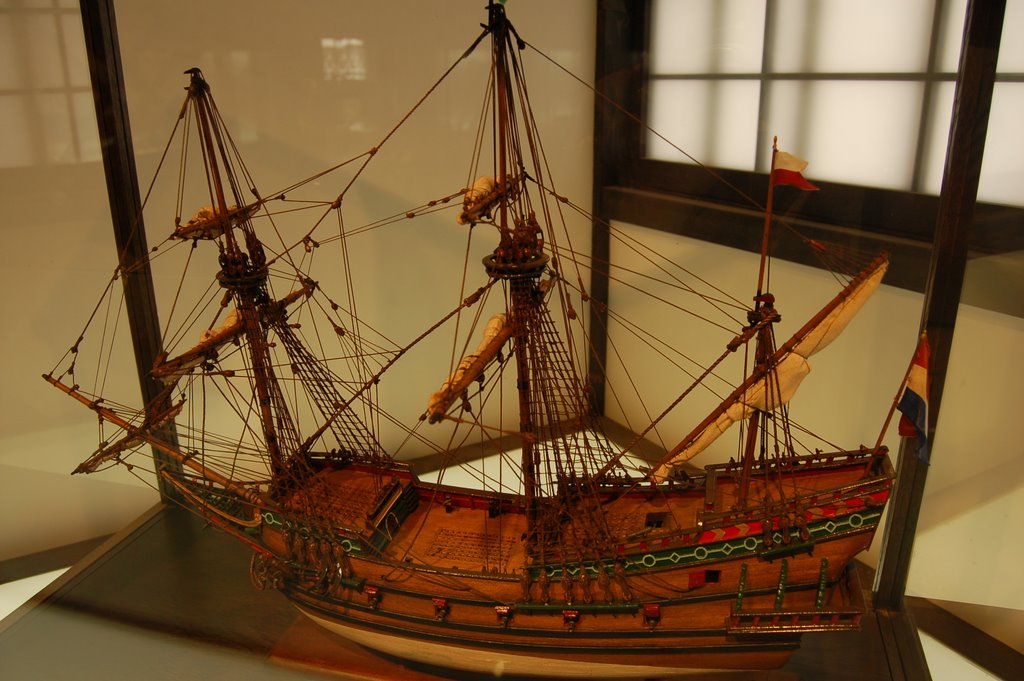
A Model of the Leifde, the first Dutch ship to reach Japan


Well to a history buff like me, a visit to Dejima was mandatory! The actual island had long since been enveloped by harbor reclaimation, but is rapidly being restored to its early 19th century form. The faithfully rebuilt structures had some fascinating displays on the history of Japan and its contact with the west. Included in the displays were a series of ship models showcasing the nations and time periods involved in the Dejima trade. One of them, pictured above, is the ship that brought William Adams, the English sailor whose life was fictionalized in Shogun, to Japan. The displays were all quite good, and almost everything was bilingual too, which is always a plus. Of course the rumbling honking trams going by every five minutes did tend to pull you out of the whole 1800's "vibe."
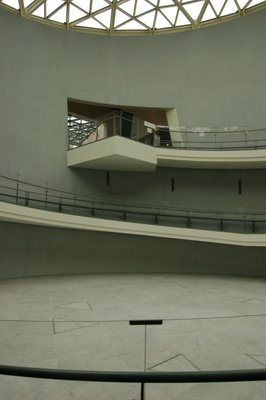
The Nagasaki Atomic Bomb Museum


Our next stop was the Nagasaki Atomic Bomb Museum in the northern suburb of Urakami. It was a sobering yet interesting stop. I will admit though that I liked the Hiroshima museum better as it seemed a bit more even handed, presenting the why of the bombing and the military reasons for targeting the city. The Nagasaki Museum pretty much just featured photo after photo of devestated schools and burned children. Which given that there were hundreds of high school kids walking around us made me fear a bit for my safety! Well not really, actually to them we were like rockstars, with lots of pointing and giggling.
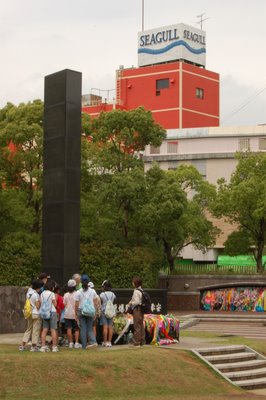
Hypocenter Park. Notice the school groups and the love hotel in the background


Next stop was a conbini lunch in Hypocenter Park, the exact place above which 'Fat Man' exploded. It was a nice park, with statues and memorials, and a section of the blasted wall of Urakami Cathedral. Ironically enough, overlooking the park is a couple of love hotels, which is rather strange to say the least. I suppose its the ultimate "make love not war" statement.


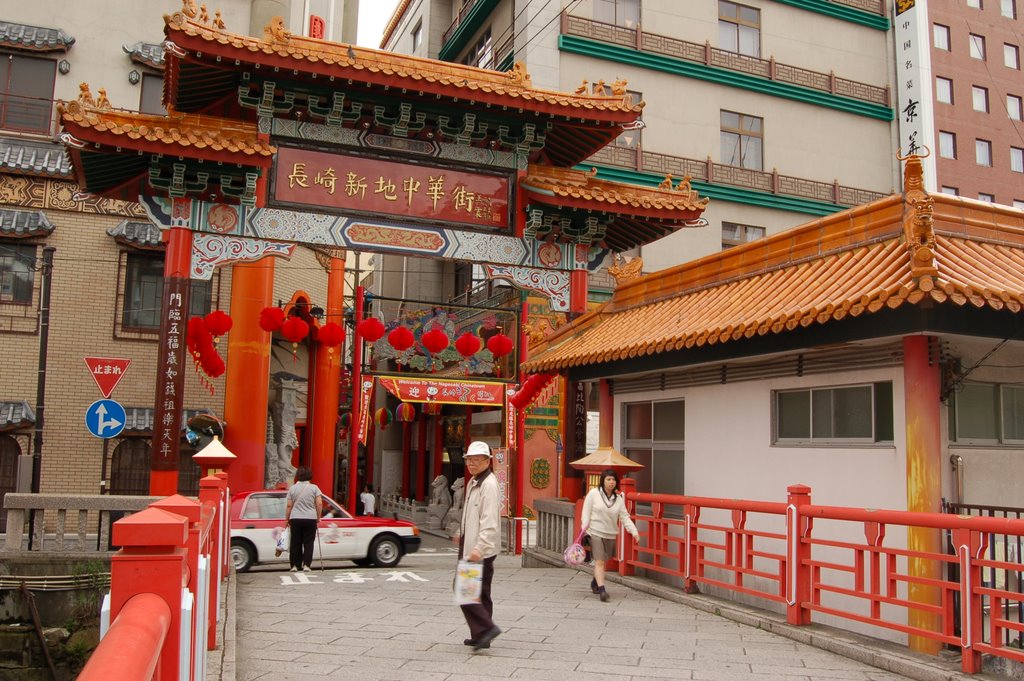
After dropping off a tired Liz at the Holiday Inn, I treked towards China Town and the Glover Slope. Nagasaki was the point of contact for ALL (legitimate) foreign trade, and that includes Chinese trade. While the Chinese merchents were less restricted than the Dutch, they did have their own quarter and were technically not allowed outside. This lead to a nice little modern China Town, packed with dim sum restaurants and interesting shops.

The view from Glover Garden


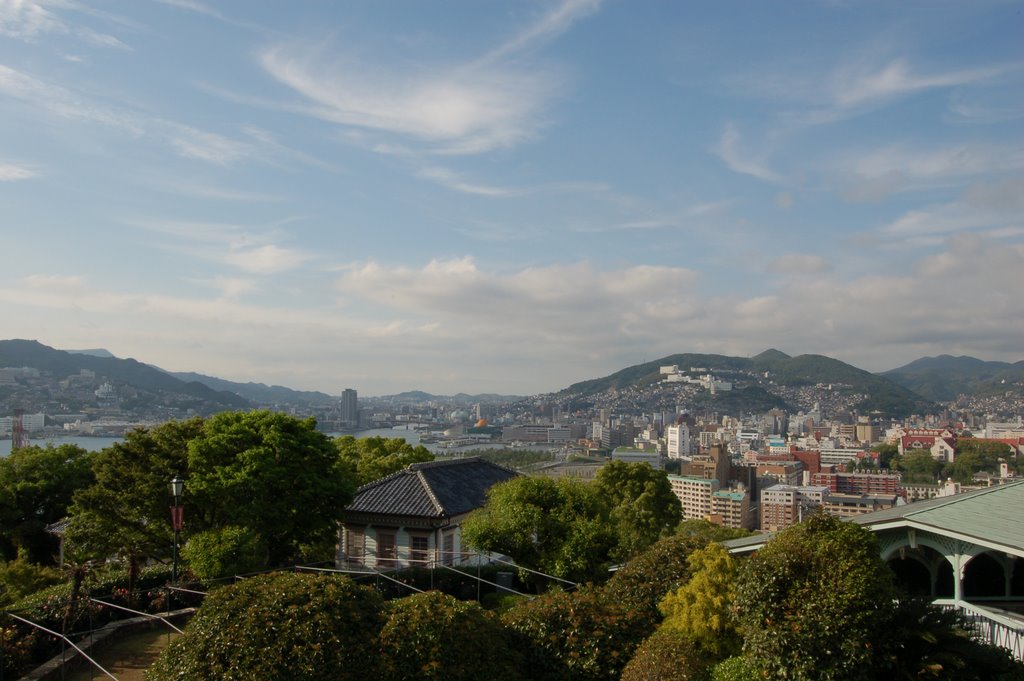
On towards the South end of town is the Glover Garden, an area that is also tied into Nagasaki's history of foreign trade. After the Meiji restoration and the opening of Japan fully to western trade, Nagasaki of course became one of the major port cities. This lead to a thriving ex-pat community, and some of the nicer houses and landmarks from that have been assembled along the pleasant landscapes of the Glover Garden. The area is named after one of the more important personages of Meiji Era Japan, one Thomas Blake Glover. Ironically this is another link to James Clavell, as Glover started his career working in Nagasaki for Jardine Matheson, the trading company fictionalized as Struans in Tai-pan and Noble House. Glover eventually started his own company, and had a profound effect in Japan doing things like bringing the first steam engine and dry dock to Japan. And so the houses of him and his collegues form a great little tourist attraction! The houses were interesting enough, but the view of Nagasaki and the harbor were what really justified the price of admission.
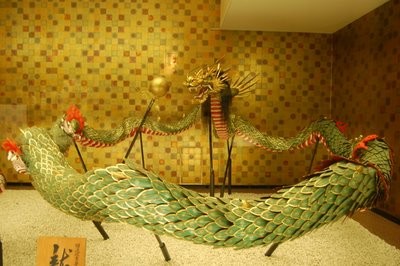
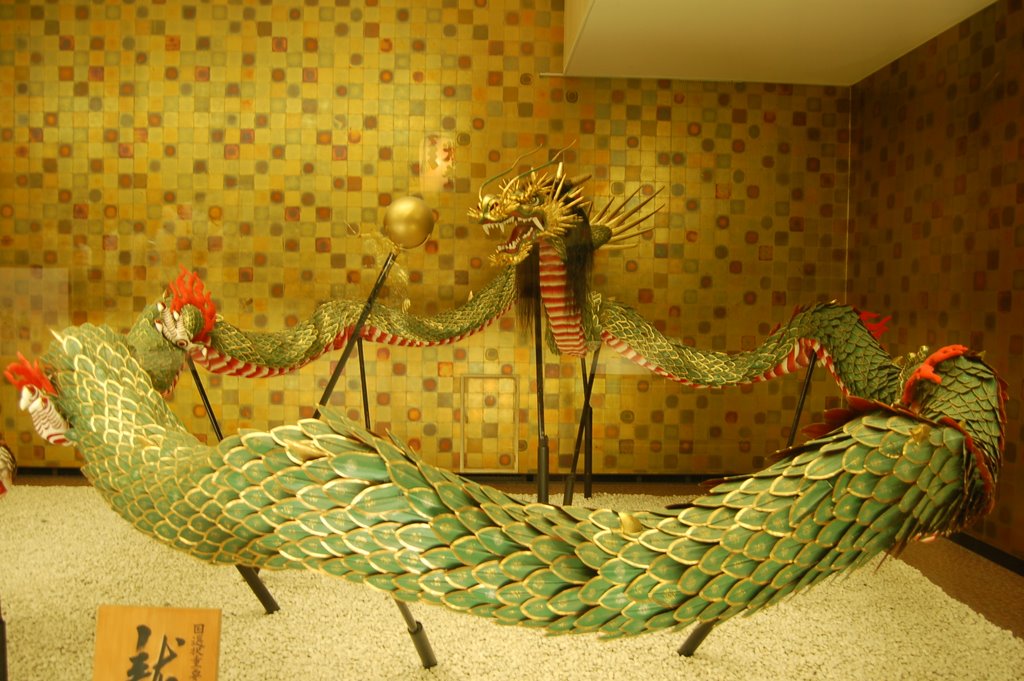
An amazing dragon housed in one of the buildings in Glover Garden


After a quick dinner at MOS Burger with Liz, I headed out for a date with the sunset. I had seen a photo taken from the top of a nearby mountain, and I just had to get my tripod and camera up there for some low light photography...

To Be Continued!
Sunday, May 28, 2006

Kyushu Part 1- Fukuoka

So Monday morning bright and early Liz and I, after a false start, walked down to Kanazawa station to begin our epic train ride. It is 3 hours by JR Express to Osaka, then another 3 hours by Shinkansen from Osaka to Fukuoka (Hakata) in Northern Kyushu.

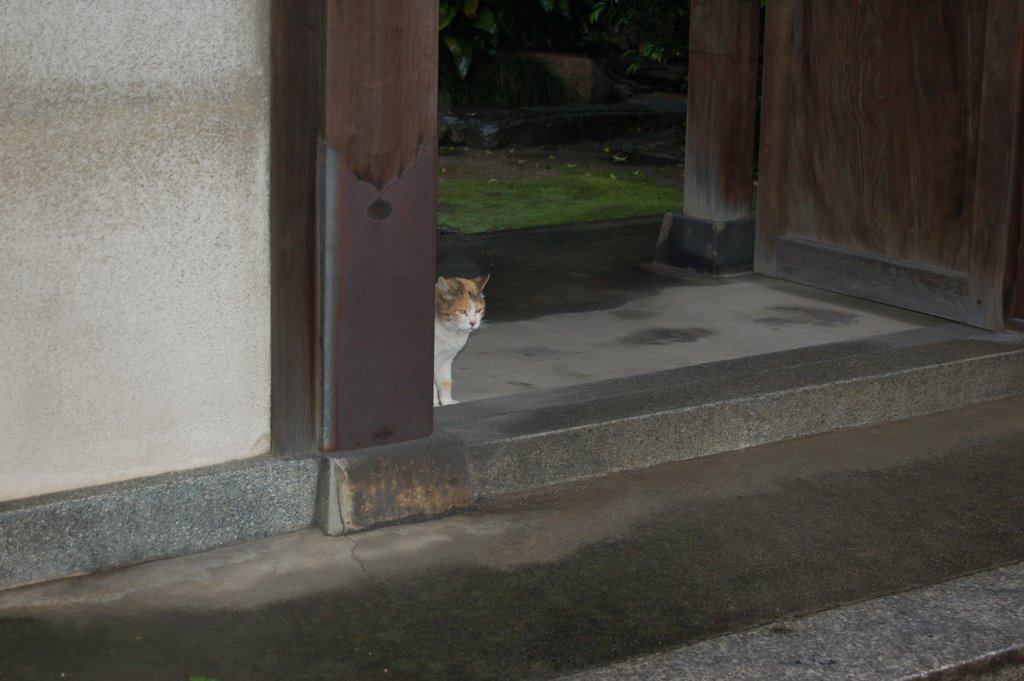
Temple Cat


For those whose geography is a little suspect, Kyushu is the furthest south of the four Home Islands. It is the third largest in size, and second largest in population, after Honshu, of course.

Fukuoka is the population and industrial center of Kyushu, but it is not much of a tourist destination. That fact, combined with our arriving pretty late in the day, conspired to prevent any serious attempts at sight seeing. We did check out Canal City, which could well be the worlds coolest mall. I mean heck, it has a canal in the middle! We also ate dinner there, at an excellent Indian restaurant.


I awoke early the next morning, but Lizzie wasn't about to budge before 8, so I headed out into a misty wet morning to explore the area and check out a few temples that were nearby. I had a pleasent time, it was a warm morning, but not too warm. Pretty muggy though, but not to the point of discomfort. Wandering the backstreets for an hour or so was interesting, but I was eager to get moving to more fascinating places.

A rainy morning


So once we devoured a continental breakfast at the hotel we crossed the street to the rail station and bought tickets for a much more interesting and photogenic city, Nagasaki.

Saturday, May 20, 2006

Southward we go.

Well my dear sister has been here a week now! Her pace of sightseeing is not quite as grueling as Moms, but she is still getting it done. The other day we went to the two big museums that Mom and I didn't see, the History Museum, and the Castle Museum. The Prefectural History Musuem was pretty cool, despite a distinct lack of English on any of the displays. But honestly, awsome samurai armour is pretty universal in scope. Of course some of the more text heavy areas were a bit lost on us!

The rebuilt section of Kanazawa castle was amazing though. For one thing, it was rebuild using tradtional methods, and is not one of the concrete and steel monstrosities that litter the landscape. Well thats a bit hars on the ferroconcrete restorations, but it was nice to be in a wooden castle again! They also had detailed descriptions, in English, of what they did to rebuild the building. The towers also presented some pretty amazing views of the Japan Alps, but of course I didn't have my camera with me!

Well tomorrow, or so, Liz and I head down south to distant and exotic Kyushu! This will be my first trip off of Honshu, so I am pretty excited. I don't know if I'll be able to maintain the update schedule, though I will try. We are taking her laptop so if we get some internet access I'll keep everybody clued in to our adventures in the land of volcanos and raw horse.